Archives

Webinar: Police body-worn cameras & domestic violence responses

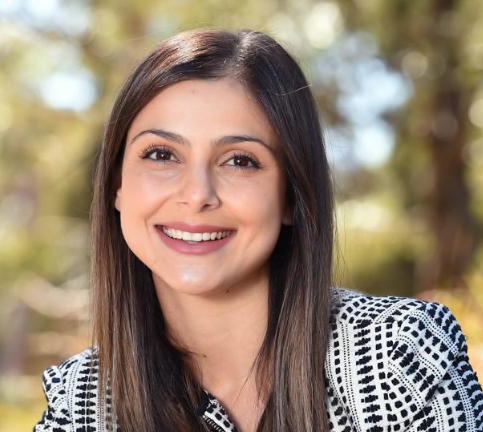
Dr Mary Iliadis, Deakin University

This event is in the past.

Wednesday, 9 August, 10:30 am – Noon, in-person and online

The VISION Consortium and the Violence and Society Centre at City, University of London, welcome Dr Mary Iliadis, Senior Lecturer in Criminology at Deakin University in Australia. She will present ‘The merits and risks of police body-worn cameras in domestic and family violence responses’ based on her recent publication in Policing and Society: An International Journal of Research and Policy.

Dr Iliadis will discuss the significant investment by Australian police agencies in the use of body-worn cameras (BWCs). Preliminary evidence suggests that when used in the context of domestic and family violence, BWC footage may strengthen evidential cases and prosecutions. There is, however, a paucity of research examining the merits of, and risks posed by the use of BWC footage in domestic and family violence incidents and legal proceedings.

Notably absent in much of the literature are the views and experiences of police officers who, as initial owners of BWC footage, are likely to affect how it is produced and interpreted. 

Her work is the first Australian study to examine how police officers, as users and operators of BWC technology, perceive the use of BWC footage in DFV-related civil and criminal legal proceedings in two Australian state jurisdictions: Western Australia and Queensland. The findings highlight the importance of exercising domain-specific, rather than a ‘one size fits all’ approach when it comes to understanding the benefits and limitations of BWC technology.

Join us in person at the Violence & Society Centre in the Rhind building on City campus from 10:30 am – noon or online. If in person, please note this seminar was originally in A01 College Building but is now in the Violence and Society Centre, 1st floor, Rhind Building.

Booking is required. Please email VISION_Management_Team@city.ac.uk and state whether you will be in person or online. A link will be emailed on the day to those attending online. Light refreshments will be served afterwards for those in person.

Disclosing domestic violence on Reddit during the pandemic

Domestic violence (DV) is a huge social issue and during the COVID-19 pandemic, DV and intimate partner violence (IPV) increased. Frequently imposed quarantine increased contact between perpetrators and victims, potentially leading to underlying increases in the occurrence of violence at home.

Social media sites such as Reddit represent an alternative outlet for disclosing experiences of violence where healthcare access has been limited. This study analysed seven violence-related subreddits to investigate different violence patterns from January 2018 to February 2022, developing a new perspective and methodology for violence research. Specifically, we collected violence-related texts from Reddit using keyword searching and identified six major types of violence with supervised machine learning classifiers: DV, IPV, physical violence, sexual violence, emotional violence, and nonspecific violence or others. Among IPV-related posts, the number with COVID-related keywords was highest in the middle-pandemic phase.

The findings highlight the importance of the role of social media as a platform for disclosing and describing experiences of violence and support the role of social media site monitoring as a means of informative surveillance for help-providing authorities and violence research groups.

For further information please see: Characterizing the Differences in Descriptions of Violence on Reddit During the COVID-19 Pandemic – Lifang Li, Lilly Neubauer, Robert Stewart, Angus Roberts, 2023 (sagepub.com)

Or contact Lifang at lifang.li@kcl.ac.uk or Angus at angus.roberts@kcl.ac.uk

Photo by Philipp Katzenberger on Unsplash

Accounting for Inequalities

In this research, Dr Alexandria Innes, Senior Lecturer in International Politics and Co-Investigator within the VISION research grant, draws on a case study of gender-based violence and subsequent responses to argue that Ontological Security Studies – a sub-paradigm of International Relations that focuses on a sociology of security based on identity and social environments – have thus far failed to fully account for intersectional inequalities within social narratives of security. 

She argues that the state is incapable of providing lived experiences of security for all residents, because of inherent inequalities that underlie national identity, affecting services people have access to and the level of support they might receive from state-based agencies such as the police and social services. It is only in attending to those inequalities among the population that we can attend to the biases at the heart of the state. 

Through the case study of the murder of Sarah Everard and the responses, the value and necessity of an intersectional approach to security is made clear: trauma responses that are positioned as transgressive by the patriarchal and White supremacist dominating account are used to undermine the credibility of alternative narratives of security. The state adopts a technique of dividing identity and constructing normatively oppressed identities as transgressive to consolidate the state narrative of security. 

For further information please see: Accounting for inequalities: divided selves and divided states in International Relations – Alexandria Innes, 2023 (sagepub.com) or contact Andri at alexandria.innes@city.ac.uk