Archives

Exploring violence, inequality, and representation

Reflections from a guest lecture

By Hannah Manzur, VISION Research Fellow

At VISION, we work with a wide range of stakeholders engaged in tackling violence and inequalities in society, from police to specialist services to national policymakers. Yet, as well as established professionals, our work also engages with students and young people through placement programmes, participatory action research, and, critically, through teaching new generations of upcoming researchers, practitioners and policymakers.  

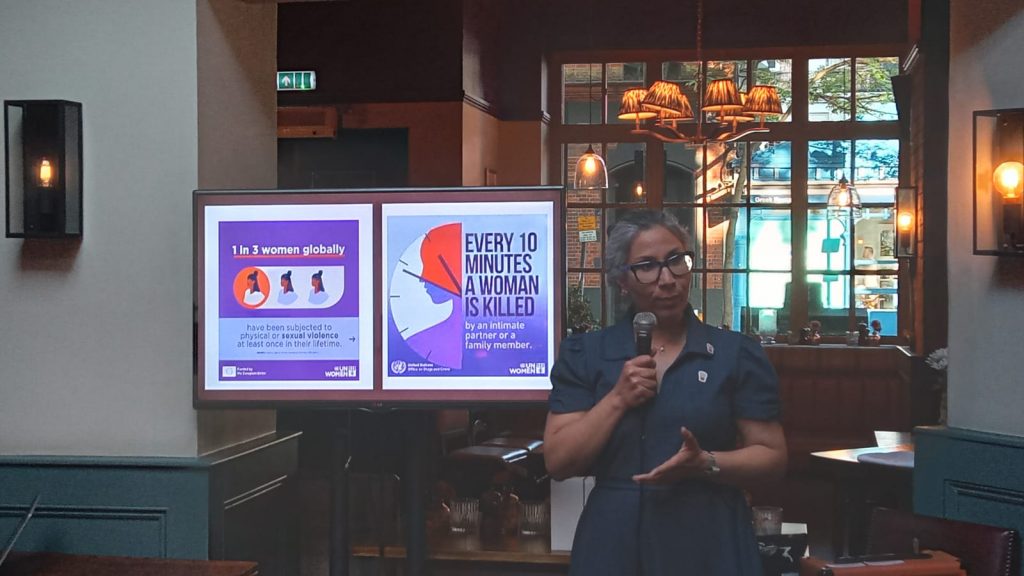
I had the pleasure of joining City St George’s Broken Britain module for undergraduate Sociology and Criminology students as a guest lecturer to share my research and experience on a topic that sits at the heart of my research and professional journey: the relationship between violence, inequality, and the social structures that sustain them. Before joining VISION, I worked as a Policy Advisor at the European Parliament, where I saw firsthand how political decisions, data classifications, and institutional blind spots can shape people’s life chances. Combined with my academic research and civil society work, my career journey has taught me the importance of building bridges and learning lessons from across research, policy, and practice spaces to examine social issues from multiple, interlocking perspectives. Those experiences continue to inform how I teach and think about inequalities and their impact on society today. 

Why Concepts Like Marginalisation and Intersectionality Matter 

I opened the session with a warm-up exercise introducing three foundational concepts: social marginalisationintersectionality, and vulnerabilisation. These ideas help us understand why and how certain groups of people consistently find themselves pushed to the edges of society, excluded from rights, resources, and security.  

In my policy work, these dynamics were impossible to ignore. Decisions that look ‘neutral’ on paper often deepen existing inequalities when viewed through an intersectional lens. Understanding how race, gender, class, sexuality, and migration status interlock isn’t just theoretical—it’s essential for designing policies that do not unintentionally harm the very people they claim to support. By tracing the rich history of intersectionality and how it functions across the individual, interpersonal, and institutional levels of society, students were encouraged to move past surface-level understandings of intersectionality as a buzzword and really engage with the complex ways violence is shaped by intersecting inequalities.  

Everyday Fear and the Unequal Distribution of Safety 

As well as focusing on physical violence, students engaged with wider experiences of violence, including those which directly affected them. One of the most engaging parts of the session involved asking students to reflect on their own relationship with fear and safety: 

  • How often does fear shape your everyday behaviour? 
  • Who feels protected, and by whom? 
  • And whose fears are dismissed or minimised? 

These questions were designed to bring abstract ideas of ‘fear’, ‘security’, and ‘inequality’ to life through student’s experiences navigating the world from their own individual positionalities. Bringing in key insights from my own research at VISION, we discussed the gaps and differences in how violence is understood and experienced from personal and policy perspectives. While working in Brussels, I learned how policymakers often speak about “security” in general terms, yet the lived reality of violence — and fear of violence — is anything but equally shared. Some communities experience over-policing while others receive under-protection; some voices are amplified, others silenced. Understanding this imbalance is crucial for building systems that genuinely keep people safe. 

The Problem of Representation: When Categories Don’t Fit 

From challenging perceptions of violence, we also delved into challenging understanding of ‘inequality’ and how categorising people into distinctive groups can distort our understanding of how different groups experience violence. Official classifications for data collection are often seen as a neutral, technical process. But so much is packed into these decisions. Categorising people, with all their nuance and diversity, into neat separate boxes may be important for creating useful statistics, but it can also create serious problems when these categories don’t reflect people’s lived realities. I displayed some of the categories commonly used in surveys and policy documents and asked students whether these labels reflect their identities or experiences. Students grappled with the contradictions and complexities of capturing inequalities, relating their own frustrations with being put in ‘the wrong box’ and how misrepresentation can carry serious consequences for people’s lived realities being visible and their future life chances. 

This is a conversation that deeply resonates with me. As both a researcher and policy advisory, I often struggled with how overly rigid or simplistic classifications erase nuance, flatten identities, and ultimately limit our ability to recognise and respond to inequality. Data shapes policy—but if the data categories themselves are flawed, so too are the decisions built upon them. Representation is not just symbolic. It determines who is seen, whose experiences are counted, and which forms of violence are acknowledged or ignored. 

Looking Ahead 

My goal in this lecture was not only to share academic insights, but to encourage students to question the systems around them—how they define people, whose realities they prioritise, and how they respond to social harm. Whether in policymaking or research, we cannot address violence and inequality without listening carefully to those who live at their intersections. Drawing on both my policymaking experience and new research findings from my work at VISION, I emphasised the importance of understanding how systems work from multiple perspectives, how cycles of exclusion and harm can feed into one another, and how areas of research, policy, and practice can work together to disrupt these cycles. Engaging with students through this Guest Lecture reminded me of the critical role of teaching in sharing knowledge, changing perspectives, and building critical tools for new generations to see and challenge cycles of inequalities and harm across their future careers and lived experiences.

For further information, please contact Hannah at hannah.manzur.4@citystgeorges.ac.uk

Photographs from Dr Hannah Manzur

Understanding violence: The risks for migrants with rising far-right fascism


Migrant community insights on building safety


By Aya Khedairi, Migrants’ Rights Network


“My dear sister. Please do not lose hope. Better days are coming. ”
– A London workshop participant

“To all migrants: The far rights are out there with their intimidating rhetoric to break you down. You must remain strong and keep hope alive. They are targeting your mental health and they want to destroy it. You must remain resolute and courageous.”
– A London workshop participant

“Do not be afraid, and take care of yourself—for example by going for a walk, talking to someone, or reporting it to the police. My advice is to stay strong.”
– A Belfast workshop participant

Note: The above are messages of solidarity that were shared in our workshops, addressed to other migrants who may be struggling, for the purpose of strengthening community safety. 


In the last few years, there has been a shift in the way that migrants, including refugees and people seeking asylum, are viewed in the UK.  Rhetoric about migration has become more aggressive which has emboldened racist demonstrations in the streets and attacks on asylum accommodation.  

With the support of the UK Prevention Research Partnership (UKPRP) VISION consortium, my colleagues and I at the Migrants’ Rights Network (MRN) are co-developing a research project with migrants that maps experiences of harm and identifies community-led safety strategies. These insights will form a practical workbook featuring shared knowledge, scenarios, and messages of solidarity to all migrants in the UK. 

Our research is centred on two cities, London and Belfast, working with communities who have experience of the asylum system / no recourse to public funds. In Belfast, we were honoured to partner with Anaka Collective/ Participation and the Practice of Rights (PPR), who have been organising and campaigning alongside people seeking asylum since 2016 on a range of topics, including documenting and supporting community members navigating race hate. We built on the research Anaka is already doing through the Kind Economy project to reach new audiences, and further develop community strategies to stay safe. In London, focus group participants shaped the themes and priorities of a subsequent collective knowledge building workshop. 

Our project builds on and brings together MRN’s narrative work, which actively challenges disinformation about migration, while trying to better understand and document the impact of hostile language on people currently in the immigration system.  

Methodology and grounding 

The scale of multifaceted violence migrants in the UK are facing is significant, ranging from the daily indignity of a hostile immigration system that is designed to exclude and push people into poverty and precarity, ever changing immigration rules and relentless government press releases promising to make people feel less welcome in the UK and threatening to remove people.  These are on top of encounters with institutional racism in schools, healthcare and workplaces, and instances of far right violence. In light of this, we took a flexible approach to the research, inviting focus groups and workshops participants to identify key information and research gaps, and topics they would like to prioritise for collective discussion. 

As has come up through discussions, we framed ‘violence’ holistically to include violent narratives, moments of physical violence, and strain of continuous fear of violence, even when no direct violence occurs. 

In anticipation of the weight of some of the topics that might come up, the first focus group was co-designed and facilitated with a somatics practitioner, with grounding, movement and breathing exercises built into the sessions, and an optional online drop-in session the following week. The guiding principle throughout has been a return to shared experiences, mapping and extending individual and community support structures, and affirming participant agency.

Since December, we have hosted two focus groups discussions and a workshop in London, and two sessions in Belfast, with 96 people with lived experience of the asylum system / no recourse to public funds, many of whom are currently, or have previously, lived in asylum accommodation. The London workshops were conducted in English, while the Belfast workshops were primarily facilitated in Arabic, with interpretation into English. 

Key themes

The key findings affirm what we anticipated – the majority of research participants spoke to the impact of increasingly hostile narratives and moments of violence that impacted on their mental health and the ways this has shaped their behaviours. This ranged from choosing to avoid certain areas, being locked into or unable to return to asylum accommodation due to the presence of far right ‘protesters’, checking the news for incidents before leaving home, getting off the bus early and walking to avoid being associated with asylum accommodation and the ‘disgusted looks’ from other passengers, to no longer reading the news. Many participants felt reporting incidents brought little support, citing slow responses, dismissive attitudes, and limited follow-up from police or security staff.

An additional recurring theme from the workshops was the role of minors in perpetrating hate incidents against migrants, whether in schools or in public space. This complicates the ability for bystanders to intervene, and in several experiences recounted in the workshops led to reported hate incidents being dismissed as ‘teenagers being teenagers’. 

However, the overarching theme that emerged, as surmised by one participant, is that “it’s not a feeling of fear, it’s a feeling of rejection”. Others similarly shared that they don’t feel “relaxed, loved in public”, and requested a group discussion on how “others manage fear, uncertainty, or anger in these contexts… especially when formal support systems feel limited or inaccessible”.  The priority emerging from the workshops is the need for more spaces and resources to be heard, the opportunities to share common experiences and the impact these have had, and to be in community. The impact of hostile narratives on mental wellbeing and community participation is a recurring theme in MRN’s work, and one that should trigger significant reflection, accountability and resourcing from policy makers and institutions, as well as allies and the general public. 

Nevertheless, the tone of our research has remained one of anger, defiance and strength. Participants were quick to identify and decry opportunistic politicians and bad faith actors who seek to use migrants as a ‘political card’, with a strong message to politicians to “not use refugees as a tool to win elections. Do not build your success by destroying others”, messages of solidarity to each other to stay strong, and the sharing of wellbeing practices, from calling friends, journaling, or singing. 

London and Belfast workshops

While London and Belfast differ in political context, migrant workshop participants in both cities face racialised hostility. In London, incidents tended to be sporadic and public-facing, whereas in Belfast they were more concentrated, including repeated attacks on specific properties and migrant-owned businesses. As outlined in Committee on the Administration of Justices’ report 2025 report on ‘Mapping Far Right Activity in Northern Ireland’, “it is well documented that there is a particular problem of the involvement of elements of loyalist paramilitarism in racist violence and intimidation, whether sanctioned by leaders of groups or factions or not, or involving persons with paramilitary connections”. This brings additional complications in challenging far right violence and a pattern of ineffective response by the police and local authorities. 

Despite all the differences, there remain striking parallels in experiences and ways of organising that can be extrapolated nationally.  Belfast offers a key reference for the rest of the UK as a precursor of escalations in far-right violence, as well as a leading example of the necessity and strength of having established community and solidarity structures to call on, decompress and celebrate with. In discussing scenarios, the first point of call was always “call Anaka”, whether to come to the house in moments of violence, support with shopping and school runs, or just to connect. 

This research is a small but essential part of shaping MRN’s ongoing work:

MRN would like to thank the UKPRP VISION consortium for the opportunity to develop this work, and to all the participants for their generous insights and reflections. 

For questions or an interest in connecting, please contact Aya at a.khedairi@migrantsrights.org.uk

This project is supported by the UK Prevention Research Partnership (Violence, Health and Society; MR-VO49879/1).

Photograph from Adobe Stock subscription.
VISION responds to Parliamentary, government & non-government consultations

Consultation, evidence and inquiry submissions are an important part of our work at VISION. Responding to Parliamentary, government and non-government organisation consultations ensures that a wide range of opinions and voices are factored into the policy decision making process. As our interdisciplinary research addresses violence and how it cuts across health, crime and justice and the life course, we think it is important to take the time to answer any relevant call and to share our insight and findings to support improved policy and practice. We respond as VISION, the Violence & Society Centre, and sometimes in collaboration with others. Below are the links to our published responses and evidence from June 2022.

  1. UK Parliament – International Development Committee – Inquiry: Women, Peace and Security. Our submission was published in March 2026
  2. UK Parliament – Public Bill Committee – Call for evidence: Crime and Policing Bill. Our submission was published in 2025
  3. UK Parliament (Library) – POSTNote – Approved Work: Violence Against Women and Girls in schools and among children & young people. Two VISION reports were referenced in their POSTNote published in August 2025
  4. UK Parliament – Public Accounts Committee – Inquiry: Tackling Violence against Women and Girls (VAWG). Our submission was published in April 2025
  5. UK Parliament – House of Lords Select Committee on Social Mobility Policy – Call for Evidence: Exploring how education and work opportunities can be better integrated to improve social mobility across the UK. Our submission was published in 2025
  6. UK Parliament – Women and Equalities Committee – Inquiry: Community Cohesion. Our submission was published in February 2025
  7. UK Parliament – Call for evidence on the Terminally Ill Adults (End of Life) Bill. Our submission was published in February 2025
  8. UK Parliament – Public Accounts Committee – Inquiry: Use of Artificial Intelligence in Government. Our submission was published in January 2025
  9. UK Parliament – Public Accounts Committee – Inquiry: Tackling Homelessness. Our submission with Dr Natasha Chilman was published in January 2025. See the full report
  10. Home Office – Legislation consultation: Statutory Guidance for the Conduct of Domestic Homicide Reviews. Our submission was published on the VISION website in July 2024
  11. UK Parliament – Women and Equalities Committee – Inquiry: The rights of older people. Our submission was published in November 2023
  12. UK Parliament  – Women and Equalities Committee – Inquiry: The impact of the rising cost of living on women. Our submission was published in November 2023
  13. UK Parliament – Women and Equalities Committee – Inquiry: The escalation of violence against women and girls. Our submission published in September 2023
  14. Home Office – Legislation consultation: Machetes and other bladed articles: proposed legislation (submitted response 06/06/2023). Government response to consultation and summary of public responses was published in August 2023
  15. Welsh Government – Consultation: National action plan to prevent the abuse of older people. Summary of the responses published in April 2023
  16. Race Disparity Unit (RDU) – Consultation: Standards for Ethnicity Data (submitted response 30/08/2022). Following the consultation, a revised version of the data standards was published in April 2023
  17. UK Parliament – The Home Affairs Committee – Call for evidence: Human Trafficking. Our submission was published in March 2023
  18. UN expert – Call for evidence: Violence, abuse and neglect in older people. Our submission was published in February 2023
  19. UK Parliament – The Justice and Home Affairs Committee – Inquiry: Family migration. Our submission was published in September 2022 and a report was published following the inquiry in February 2023
  20. Home Office – Consultation: Controlling or Coercive behaviour Statutory Guidance. Our submission was published in June 2022

For further information, please contact us at VISION_Management_Team@city.ac.uk

Photo by JaRiRiyawat from Adobe Stock downloads (licensed)

VISION presenting at the Prevention Research 2026 conference

Nine VISION colleagues have had workshop, symposium and individual abstracts accepted at the upcoming Prevention Research 2026 conference in March. The Population Health Improvement UK and the National Institute for Health and Care Research, in partnership with VISION funder, the UK Prevention Research Partnership, organised the event to explore the latest research and collaborative strategies for preventing non-communicable diseases and reducing health inequalities across the UK. This year’s theme is Connecting Research, Policy, and Practice for Health Equity.

VISION research is interdisciplinary and as such, several colleagues collaborated on symposiums and the workshop. We are partnering with Groundswell, Kailo and PHI UK Population Mental Health as well as the Violence, Abuse and Mental Health Network,  and High Trees Community Development Trust amongst others.


Individual presentation

Violence across the life course and physical and mental health trajectories in later life

  • Anastasia Fadeeva, VISION Research Fellow, City St George’s University of London


Symposiums

Lessons Learned from Lived Experience Engagement in Violence and Trauma Research

  • Sian Oram, Professor at Kings College London and VISION Co-Investigator
  • Kimberly Cullen, VISION Knowledge Exchange Manager, City St George’s UoL
  • Alicia Stillman, Violence, Abuse and Mental Health Network at Kings College London
  • Polina Obolenskaya, VISION Research Fellow, City St George’s UoL
  • Annie Bunce, VISION Research Fellow, City St George’s UoL

Policy insights from a population understanding of mental health inequalities: using England’s mental health survey series, the Adult Psychiatric Morbidity Surveys (APMS)

Presenters include:

  • Sally McManus, Professor at City St George’s UoL and VISION Co-Deputy Director
  • Elizabeth Cook, Senior Lecturer at City St George’s UoL and VISION Co-Investigator

Centring the voices of young people – Learning from four participatory, place-based approaches to violence prevention

Presenters include:

  • Elizabeth Cook, Senior Lecturer at City St George’s UoL and VISION Co-Investigator
  • Ruth Weir, VISION Senior Research Fellow at City St George’s UoL

Understudied Commercial Drivers of Health: Exploring Industry Practices & Developing a Prevention Research Agenda

  • Presenters include Sally McManus, Professor at City St George’s UoL and VISION Co-Deputy Director


Workshop

Using Systems Approaches to Connect Communities and Tackle Complexity in Prevention

  • Workshop leads include Olumide Adisa, VISION Co-Investigator at City St George’s UoL

Workplace violence and gender inequalities: Why the silence persists


Professor Vanessa Gash


By Vanessa Gash

Professor Vanessa Gash was an invited contributor on a recent panel on Barriers to Research on Sex and Gender at City, University, where she presented some of her work funded by VISION on workplace violence. 

Workplace violence is often imagined as a rare or extreme event—yet for many employees, it forms part of a daily reality that remains unseen, unreported, and unmanaged. Evidence from recent reviews and representative UK data paints a troubling picture: violence, harassment, and bullying at work are both widespread and systematically minimised, particularly for groups already facing gendered or intersectional disadvantages.

One of the most striking patterns across studies is the silence of victims. Although around 8.3% of working‑age employees report threats, insults, or physical attacks at work, many more choose not to disclose their experiences. Research suggests a persistent “dark figure of crime,” with roughly 60% of crimes generally going unreported, and workplace violence likely exceeding this threshold. Victims often feel ashamed or fear appearing incompetent. At work—where reputational stakes are high and careers depend on social status—these concerns are intensified.

The Sullivan Review sheds further light on the issue by exploring barriers to research within academia itself. Alarmingly, bullying, harassment, and ostracisation emerged as the second most commonly cited barrier, reported by 42% of respondents. The sample was disproportionately composed of colleagues with protected characteristics—women, LGBTQ+ individuals, older staff, and those with disabilities. These groups are historically more vulnerable to exclusionary practices, and their experiences offer insight into how violence and inequality become mutually reinforcing.

A recurring theme across sectors—from nursing to higher education, hospitality, and even commercial kitchens—is managerial normalisation of violence. Studies show that managers may dismiss or downplay workers’ reports, frame violent incidents as interpersonal misunderstandings, or subtly blame victims for “mismanaging” interactions. Such responses erode trust and suppress reporting. Without acknowledgement from leadership, workplace violence becomes embedded in organisational culture, shielded by institutional inertia.

Gender inequalities intersect heavily with these processes. Women and gender‑diverse workers often face disproportionate scrutiny and are more likely to internalise blame for mistreatment. In environments where masculinity norms dominate—whether through expectations of resilience, emotional restraint, or competitiveness—experiences of violence can be viewed as a failure to cope rather than an organisational problem requiring intervention.

The consequences are not merely cultural or professional—they are clinical. Evidence from the UK Household Longitudinal Study indicates that workplace violence is predictive of common mental disorders (CMDs) both at baseline and one year later, suggesting a causal pathway. Mental health harms linger long after individual incidents fade.

To break this cycle, organisations need scientifically designed interventions that include ongoing measurement, enforce accountability, and centre the voices of both workers and management. Most importantly, institutions must confront the gendered dynamics of silence, shame, and managerial denial that allow violence to persist.

For further information, please contact Vanessa at vanessa.gash.1@citystgeorges.ac.uk

Cover photo supplied via Adobe Stock subscription.

Webinar: Risk of sexual violence along migration routes and the implications for current asylum policy in the UK and Europe


Sexual violence along migration routes: A systematic review and synthesis

Thursday 29 January 2026, 2  – 3 pm, online

Email VISION_Management_Team@citystgeorges.ac.uk to register for the Teams link

This event is in the past.

VISION Co-Investigator, Dr Alexandria (Andri) Innes and PhD student Merili Pullerits will outline how sexual violence is a pervasive and structurally embedded feature of undocumented migration journeys. It is often associated with economic status, and economic need or destitution and often expected along the routes. Some migrants who plan to travel without documents take action to prevent unwanted pregnancy before travelling, or seek protection by travelling in mixed sex groups or in couples of convenience. 

This review found that some routes situate sexual violence in an intense climate of violence and brutality, and at times sexual violence victimisation is considered to be the only available way to prevent deportation or death. Many irregular migration journeys take place in hostile landscapes where guides such as smugglers and traffickers are the only means of transport, and refusing sexual contact would result in abandonment and death. 

The worst forms of sexual violence are brutal and indiscriminate, involve forced witnessing, and forced sex act perpetration on other migrants. It is used against men, women, trans and non-binary migrants, but there are important gendered differences in the portray of sexual violence and the expectation of sexual violence before and during a migration journey. 

Finally, Andri and Merili will highlight how sexual violence along migration routes are executed by various types of perpetrators, including organised and systematic perpetration by state agents such as border guards and police, and by smuggling and trafficking gangs. It is also carried out by opportunists who are often migrants travelling the irregular route, or are people who reside along the route and take advantage of the vulnerable populations transiting through.

There is very little, if any, form of accountability for perpetrators and very little protection from violence available to migrants. There is also no protection offered by receiving countries to prevent removal directly into contact with perpetrators along migration routes in locations that are often considered ‘safe third countries.’ 

To register and receive the Teams link, please contact VISION_Management_Team@citystgeorges.ac.uk


Inequalities in how work and care responsibilities are distributed impact on the gender pay gap

Despite decades of progress, the gender pay gap remains a persistent feature of the UK labour market. Currently women in the UK earn approximately 11% less than men.

VISION researcher and Reader at City St George’s UoL, Vanessa Gash, writes in her article, The gender pay gap looks different depending where you are on the income ladder, for The Conversation, that the gender pay gap is not just because of differences in education or job type, but due to deeper inequalities in how work and care responsibilities are distributed.

Based on a study investigating barriers to equal pay, Vanessa and colleagues examined different predictors of the gender pay gap at the mean and for different income groups. Using the United Kingdom Household Panel Survey (UKHLS), the team provided a detailed analysis of the effects of individual work histories, with up to 40 years of retrospective data to uncover how these inequalities play out across income groups.

Findings

  • Equal pay policies must be tailored to the needs of different income groups. For wealthier households, policies that support full-time work and chip away at sex segregation may be effective so that women can more readily access better-paid jobs. But for poorer households, the focus should be on improving access to stable and better-paid jobs, while reducing discrimination and supporting flexible work arrangements.
  • Efforts to close the gender pay gap must avoid pitting the gains of high-earning women against the losses of low-earning men. In an era of rising political populism, this could undermine support for equality.
  • Promotion of good-quality employment for all and supporting equalised caregiving responsibilities is necessary.

By failing to address the barriers that prevent men and women from participating fully in both paid work and unpaid care work, reductions in the gender pay gap are unlikely any time soon.

For further information: Please contact Vanessa at vanessa.gash@citystgeorges.ac.uk

Photograph from Adobe Photo Stock subscription

Confronting violence against vulnerable groups: Insights from a Pint of Social Sciences

On a balmy May evening, VISION researchers Dr Anastasia Fadeeva and Dr Ladan Hashemi had the pleasure of presenting at Pint of Social Science, an engaging public event held at a local pub. The event, organised by Caroline (Cassie) Sipos, Business Development Manager for the School of Policy and Global Affairs, City St George’s University of London, was part of the broader Pint of Science movement.

This event, one of many on the same night, is an annual global festival bringing academic research into informal, accessible spaces such as pubs or cafes. The environment enables researchers and the public to connect over important social issues, drinks, and conversation.

Anastasia showcased her research on violence against older people, an often-overlooked area of abuse and harm. She spoke about different forms of violence in older age, including physical, emotional, and economic, and discussed the social and structural barriers that allow this violence to remain hidden. Anastasia also shared the findings from the recent study that measured the prevalence of violence in older age and the associations between violence and mental health in later life. The talk concluded with calls for stronger protective measures and greater public awareness to safeguard the dignity and wellbeing of older populations.

Ladan shared the Breaking the Silence campaign, which uses culturally sensitive animations to amplify the voices of women in Iran affected by violence. Grounded in a survey of 453 Iranian women, the campaign highlights the widespread and multifaceted nature of violence against women and girls, and the urgent need for greater awareness and legal reform. Through powerful storytelling, the animations address issues such as coercive control, economic abuse, and technology facilitated abuse, while promoting the role of active bystanders and signposting available support services. The campaign aims to break taboos, raise awareness, and foster dialogue about women’s rights and freedoms in Iran.

The evening provided a lively and welcoming space for thoughtful conversations and personal reflections. The audience was engaged with both talks, asking insightful questions—often the kind that don’t come up in professional or academic settings. Pint of Social Sciences was a reminder of the value of public engagement and the importance of making research accessible beyond academia. Events like this help to build understanding and inspire collective action towards a more just and informed society.

For further information, please contact VISION_Management_Team@citystgeorges.ac.uk

Photographs: Top – Dr Anastasia Fadeeva; Above – Dr Ladan Hashemi

Call for Frontiers in Sociology abstracts: Enhancing data collection and integration to Reduce health harms and inequalities linked to violence

Frontiers in Sociology is currently welcoming submissions of original research for the following research topic: Enhancing Data Collection and Integration to Reduce Health Harms and Inequalities Linked to Violence.

This edition is guest-edited by Dr Estela Capelas Barbosa (University of Bristol and the UKPRP VISION research consortium), Dr Annie Bunce (City St. George’s, UoL and the UKPRP VISION research consortium), and Katie Smith (City St. George’s, UoL / University of Bristol).

Submissions should focus on any of the following:

  • advancing measurement approaches which emphasise cross-sector harmonisation to better evaluate interventions, address health inequalities, and reduce violence
  • addressing any form of violence (e.g., physical, non-physical, technology-facilitated) and its impacts on health, social and economic well-being, and marginalised groups, considering intersections of age, gender, ethnicity, disability, and religion

Research using existing datasets or primary data (quantitative or qualitative), cross-sectoral and cross-disciplinary approaches (e.g., sociology, criminology, public health), and lived experience perspectives is encouraged.

Contributions may include conceptual reviews, methodological innovations, empirical studies and systematic reviews on themes such as health inequalities, intervention effectiveness, outcome measurement, data harmonisation, and linkage strategies.

Abstracts are due by 7th April 2025, and the deadline for manuscripts is 28th July 2025.

For details of the different article types accepted and associated costs, please follow this link https://www.frontiersin.org/journals/sociology/for-authors/publishing-fees.

For more information and to submit an abstract or manuscript, please use the “I’m interested” link below or visit the Research Topic page here https://www.frontiersin.org/research-topics/67291/enhancing-data-collection-and-integration-to-reduce-health-harms-and-inequalities-linked-to-violence

This special edition provides an excellent opportunity to advance knowledge in this critical area. Please do reach out and contact us if you have any questions: annie.bunce@city.ac.uk

Photo from Adobe Photo Stock subscription

The story so far: Co-production in Lambeth

By Elizabeth Cook, Senior Lecturer in Criminology & Sociology at City St George’s, University of London

As the VISION consortium approaches the end of its third year, work continues on consolidating the learning from various large datasets in crime and justice, health, and specialist services.

What we know is that these datasets are structured in different ways, collected by different agencies, and curated for quite different purposes. They represent particular ways of knowing about violence and abuse: they can help to identify patterns (e.g., what determines whether victim-survivors of sexual violence and abuse access support), prevalence (e.g., of workplace bullying and harassment), trends over time, and associations (e.g., between intimate partner violence, suicidality, and self-harm). However, we also know that large datasets struggle to capture the complex, and sometimes messy, realities of violence and abuse experienced by communities, especially those that are marginalised and minoritised.

Peer action research in Lambeth

In Lambeth, working in collaboration with peer researchers has made visible the evidence gaps that emerge at the intersection of multiple systems of inequality, including racism and misogyny.

We are lucky to be partnered with Lambeth Peer Action Collective (LPAC), High Trees and Partisan as part of a peer action research project. The aim of the project is to explore the role that trusted adults and trusted spaces can play in protecting young people from exposure to violence. Currently, there are 11 peer researchers that work as part of the LPAC: a collective of young people and youth organisations campaigning for change in their community. They are supported by High Trees, a Community Development Trust in Tulse Hill, eight partner youth organisations, and Partisan, a Black-led Community Interest Company providing culturally sensitive mental health support.

What has been achieved so far?

The project builds upon research conducted by the previous cohort of LPAC researchers conducted between December 2021 and August 2022. This project identified the impacts of violence on young people in Lambeth and the structural conditions of poverty, housing, education, urban regeneration, and public safety that were experienced unequally across the community.

Developing these findings further, the second cohort of peer researchers have been participating in weekly research training sessions led by High Trees and supported by VISION. The group has been learning everything they need for the next stage: from safeguarding and finances, to developing research questions, critical thinking skills, and how to evaluate research methods. This month, the LPAC researchers are getting ready to put into practice the interview skills that they have been learning each week in preparation for the next stage of the project – recruitment.

There has been amazing progress so far – not only in forming a research question and defining key concepts, but in developing a shared space for researchers to feel like change is possible and to collaborate with others who want the same.

What have we learned?

There are ongoing conversations about how peer action research can work to redress the imbalance between ‘researcher’ and ‘researched.’ These conversations seem even more relevant to research on violence and abuse, where the issue of power is central to both.

So far, the weekly sessions with peer researchers as well as our meetings with High Trees have taught us a lot about how power operates within institutions and the ways that it can be shared if there is a will to share it. This can be reflected in adequate resourcing, decision-making, access, and sharing skills and knowledge. The project has underlined the importance of respect in research: for different forms of expertise, within spaces, and within research relationships. The project has also challenged adult-centric assumptions about what we suppose that young people need to live better lives.

As mentioned previously, this project highlights the evidence gaps that occur at the intersection of multiple inequalities. In doing so, peer action research can also shape how we utilise large datasets, recognising how different social realities are reflected within existing data (or not).

In this sense, this collaboration has also made hyper-visible the question of: what and who is research for? As others have suggested, action research is not so much a methodology, but a way of thinking about research: it is a way of approaching a specific problem through community, participation, and curiosity. It is not necessarily driven by knowing more about something, but by wanting to change something with what you know.

We hope that this research continues in that spirit!

Further information

Do check out the LPAC’s manifesto for change and their previous report!

 Photograph is copyrighted to Lambeth Peer Action Collective and not for use.