Archives

VISION/VASC Webinar Series: Understanding Economic Abuse


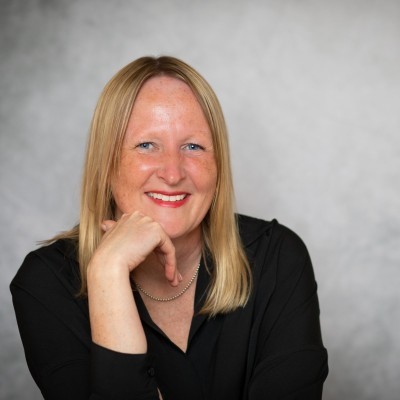
Dr Nicola Sharp-Jeffs

This event is in the past.

We are pleased to announce our next webinar for the VISION and Violence & Society Centre (VASC) Webinar Series on Tuesday, 28 October, 11.00 – 11.50.

Dr Nicola Sharp-Jeffs is a leading international voice on economic abuse and author of Understanding and Responding to Economic Abuse.

She also founded Surviving Economic Abuse (SEA) in 2017 following her Churchill Fellowship to the US and Australia to learn about best practice in responding to financial abuse. After seeing the innovative responses to economic abuse in these countries, Nicola was determined to ensure that women in the UK had access to the same support. Throughout her leadership, SEA has pioneered innovative practice, policy and legislative approaches to economic abuse in the UK.

After seven successful years, Nicola Sharp-Jeffs stepped down as CEO in May 2024 and now works as an expert advisor and consultant to organisations working to build women’s economic safety and secure economic justice.

In this webinar, Nicola will share her expertise and insight about economic abuse. She will highlight the need to develop effective responses, and the imperative that all women, everywhere, should have equal access to and control over the economic resources they need to live the life they want.

Please join the VISION research consortium and the Violence and Society Centre at City St George’s University of London to hear more about Nicola’s research and practical experience to raise awareness and implement effective measures to reduce and prevent economic abuse.

To register for the event and receive the Teams link, please email: VISION_Management_Team@city.ac.uk

The purpose of the VISION/VASC webinar series is to provide a platform for academia, government and the voluntary and community sector that work to reduce and prevent violence to present their work / research to a wider audience. This is a multidisciplinary platform and we welcome speakers from across a variety of fields such as health, crime, policing, ethnicity, migration, sociology, social work, primary care, front line services, etc. If interested in presenting at a future Series webinar, please contact: VISION_Management_Team@city.ac.uk

This webinar series is sponsored by the UK Prevention and Research Partnership consortium, Violence, Health and Society (VISION; MR-V049879) and the Violence and Society Centre at City St George’s, University of London.


 

Assisted dying bill: Safeguards against domestic abuse and coercion must be strengthened

One in four women and one in seven men in England and Wales have experienced domestic abuse. Coercive and controlling behaviours are core to domestic abuse. They result in loss of autonomy and independence and are intended to isolate and reduce self-worth. Such behaviours are common but hard for health professionals to detect.

If passed, the Terminally Ill Adults (End of Life) Bill will allow people who are terminally ill and expected to die within six months to request assistance to end their lives. VISION researchers Gene Feder, Elizabeth (Lizzie) Cook and Sally McManus have written an opinion published in The BMJ that calls for safeguards in the bill need to be strengthened to prevent coercion in the context of domestic abuse.

Assisted dying requires a careful consideration of the risks posed by domestic abuse and coercion. The current bill does not fully tackle specific safeguarding concerns for patients experiencing domestic abuse which can include economic, emotional, physical, and other forms of abuse from a partner or other family member. To safeguard against domestic abuse and associated coercion, Gene, Lizzie and Sally propose a set of principles that should be part of the UK bill.

  1. For doctors responding to any request for assisted dying, training must be extensive, specialist, in person, and backed up by referral pathways.  Independent domestic abuse advocates, with expertise in recognising coercive control, could contribute to assessment of assisted dying requests. 
  2. Commitments to confidentiality and data security must not obscure assisted dying decisions and the contexts in which they occur. The bill must ensure transparency.
  3. The bill must establish accountability. Transparent data about each stage of the approval process would also enable monitoring and regular scrutiny of the processes and outcomes of assisted dying legislation.
  4. Lawmakers must resist expansion. Dementia and mental health conditions are now being considered for eligibility. These are conditions prevalent in survivors of domestic abuse. The UK bill should include clauses that limit any expansion of scope to other conditions and situations.

To read the opinion piece: Safeguards against domestic abuse and coercion in the assisted dying bill must be strengthened

To cite: BMJ 2025;390:r1914

For further information, please contact Gene at gene.feder@bristol.ac.uk

VISION/VASC Webinar Series: The intersection of a gendered economy and violence prevention

Mary-Ann Stephenson

This event is in the past.

We are pleased to announce our next webinar for the VISION and Violence & Society Centre (VASC) Webinar Series on Tuesday, 17 June, 11.00 – 11.50.

Mary-Ann Stephenson is the Director of Women’s Budget Group (WBG), a feminist think tank that works in research, advocacy and training to realise a gender equal economy in the UK. As an influential link between academia, the community and voluntary sector, and through their activities of government building and exchanging evidence, data, knowledge, and capacity, WBG’s work often interlinks with violence-prevention research and policy.

Examples include their 2019 report, Benefits or barriers? Making social security work for survivors of violence and abuse across the UK’s four nations, written with Surviving Economic Abuse and End Violence Against Women Coalition. Findings highlighted that the social security systems across the UK failed survivors of violence and abuse when they needed help most.

In 2024, WBG published Funding for violence against women and girls services: Briefing for a new government. Recommendations included:

  • A commitment to long-term grant funding for specialist women’s services, including ringfenced funding for services led ‘by and for’ Black and minoritised women, Deaf and disabled women and LGBT+ survivors.
  • More specialist training for police dealing with VAWG cases.
  • Reform social security (including uprating benefits and scrapping the benefits cap and two-child limit) to ensure women’s economic independence and their ability to leave abusive relationships.

In this webinar, Mary-Ann will highlight WBG’s programme of work demonstrating that a gender equal economy and the embedding of gender equality policymaking are necessary in the reduction of violence against women.

Please join the VISION research consortium and the Violence and Society Centre at City St George’s University of London for what will be a fascinating exploration of economic inequality through a gendered lens.

To register for the event and receive the Teams link, please contact: VISION_Management_Team@city.ac.uk

The purpose of the VISION/VASC webinar series is to provide a platform for academia, government and the voluntary and community sector that work to reduce and prevent violence to present their work / research to a wider audience. This is a multidisciplinary platform and we welcome speakers from across a variety of fields such as health, crime, policing, ethnicity, migration, sociology, social work, primary care, front line services, etc. If interested in presenting at a future Series webinar, please contact: VISION_Management_Team@city.ac.uk

This webinar series is sponsored by the UK Prevention and Research Partnership consortium, Violence, Health and Society (VISION; MR-V049879) and the Violence and Society Centre at City St George’s, University of London.
Upcoming event: Economic abuse – new research to inform prevention  

This event is in the past.

Join us for an in person seminar on 6 May exploring the picture of economic abuse in the UK and the systems that enable it followed by a morning tea

Economic abuse is a legally recognised form of domestic abuse that often occurs within the context of intimate partner violence. Control over an individual or family’s money and the things that can be bought can have long-lasting and damaging effects. New research is crucial to building the knowledge base and contributing to the burgeoning scholarship.

Join the Violence & Society Centre and the UKPRP VISION research consortium on Tuesday 6 May from 10 am – noon in Rhind Building at City St George’s, University of London, for a seminar highlighting: 

  • the nature and impact of economic abuse in the UK; 
  • the perpetuation of this abuse through family-owned companies; and 
  • the misuse of financial products, services and technologies provided by banks in order to harm intimate partners 

Dr Vanessa Gash will chair the seminar and introduce our guest presenters with expertise in researching economic abuse: 

  • Rosa Wilson Garwood, Surviving Economic Abuse 
  • Dr Vivien Chen, Monash University 
  • Dr Belén Barros Pena, City St Georges 

Agenda 

  • 10:00 – 10:10      Welcome from the Chair, Dr Vanessa Gash, City St George’s
  • 10:10 – 10:30      Understanding the nature and impact of economic abuse in the UK, Rosa Wilson Garwood, Surviving Economic Abuse 
  • 10:30 – 10:50       Hidden risks of economic abuse through company directorships,Dr Vivien Chen, Monash University (Australia) 
  • 10:50 – 11:10       Addressing fintech-facilitated economic abuse through participatory design methods, Dr Belén Barros Pena, City St George’s  
  • 11:10 – 11:30      Panel Q & A facilitated by Vanessa Gash 
  • 11:30 – Noon      Tea / networking in the Violence & Society Centre 

The seminar will be in Rhind Building, St John Street, London, EC1R 0JD, and end with a panel discussion and Q&A followed by a morning tea in the Violence & Society Centre.  

Please register here: Economic abuse seminar

For further information, please contact VISION_Management_Team@citystgeorges.ac.uk

VISION-funded research: Surviving Economic Abuse survey initial findings released

Tackling economic abuse should be part of the solution to meet the new government’s ambitious target to halve violence against women and girls in a decade. It is important that the government’s measurement approach can understand the range of ways that economic restriction, exploitation and sabotage that victim-survivors experience at scale across the UK.

Recent survey results from Surviving Economic Abuse (SEA) tell a powerful story that highlights experiences of economic abuse across the UK. The full report will be launched by SEA in March 2025, but their early release of key findings include:

  • Economic abuse is often understood to only be about creating dependency through restriction, but it can take many forms e.g., having a partner or ex-partner steal money, refuse to pay bills, or scare their partner into taking out credit. Early analysis suggests that a wider range of behaviours may continue post-separation than previously thought.
  • The data shines a light on the dangerous situation for young women- an area that SEA and VISION are seeking funding to explore further. 18–24-year-olds experienced more economic abuse than any other age group, for example 12% of this sample had been prevented from having log-in information (e.g. passwords, usernames) to key accounts such as online banking, utilities accounts, emails by a partner or ex-partner compared to 4% of all women.
  • Black, Asian and racially minoritised women in the UK may be more than twice as likely to experience economic abuse from a partner or ex-partner than White women, with women with a Black/African/Caribbean or Black British ethnicity particularly at risk.
  • Disabled women in the UK may be nearly twice as likely to experience economic abuse from a partner or ex-partner as non-disabled women

The VISION consortium was delighted to financially support SEA’s research, A rapid impact survey to monitor the nature and prevalence of economic abuse in the UK, through our Small Projects Fund in spring 2024. Their full report will be widely shared in 2025, including on the VISION website and through our networks.

Photograph from Adobe Photo Stock subscription
